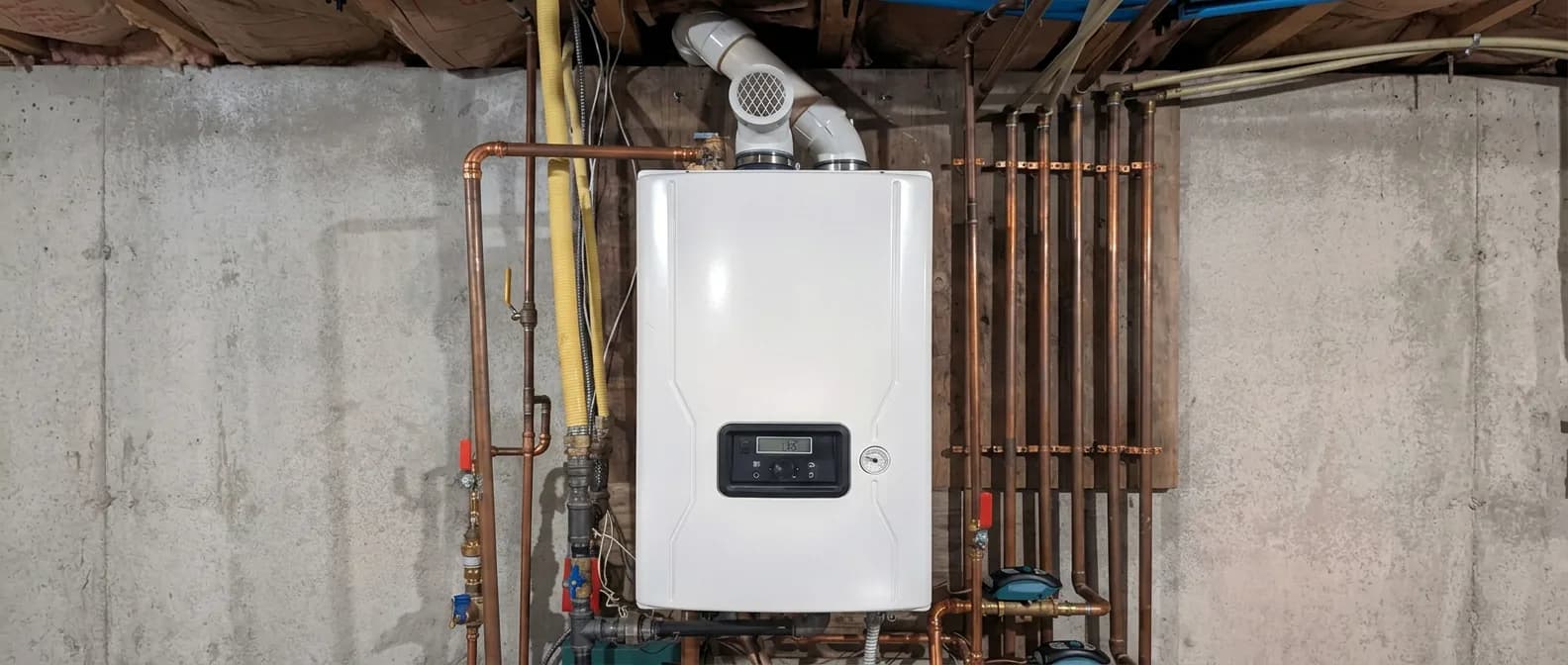
Water HeaterServices
Tankless and heat pump water heater installation, repair, and upgrades — designed for efficiency, reliability, and long-term performance.
Two Modern Solutions, One Goal
Both tankless and heat pump water heaters are major upgrades over traditional tanks. Here's how each one works and why they're worth considering.
How It Works
Water flows through the unit and is heated instantly by a powerful gas burner or electric element — only when you turn on the tap. There's no storage tank, so there's no standby energy loss and no waiting for a tank to refill.
Key Benefits
How It Works
A compressor extracts heat from the surrounding air — even in cooler temperatures — and transfers it into a storage tank. Think of it like a refrigerator in reverse. It uses up to 70% less electricity than a standard electric tank because it moves heat rather than generating it.
Key Benefits
Common Problems
- High energy bills from traditional water heaters
Standard electric resistance tanks consume 3–4x more energy than a heat pump unit. Tankless systems eliminate standby losses entirely. Either upgrade path dramatically lowers monthly utility costs.
- Running out of hot water
Undersized or aging tanks can’t keep up with peak demand. Tankless water heaters provide unlimited on-demand hot water, while properly sized heat pump tanks handle heavy usage without temperature drops.
- Limited space for equipment
Tankless units mount on a wall and free up floor space. Heat pump water heaters need airflow but have a similar footprint to standard tanks. We evaluate your space and recommend the best fit.
- Aging or failing tank systems
Tanks older than 10–12 years are prone to sediment buildup, corroded anodes, and failing elements. Proactive replacement with a tankless or heat pump unit avoids emergency failures and water damage.
- Inconsistent water temperatures
Fluctuating temperatures often point to a failing thermostat, corroded dip tube, or undersized system. Modern tankless and heat pump units maintain precise temperature control.
- Confusion around incentives or upgrade options
Between federal tax credits, NYSERDA rebates, and utility programs, navigating incentives can be overwhelming. We help identify every rebate you qualify for and handle the paperwork.
Our Approach
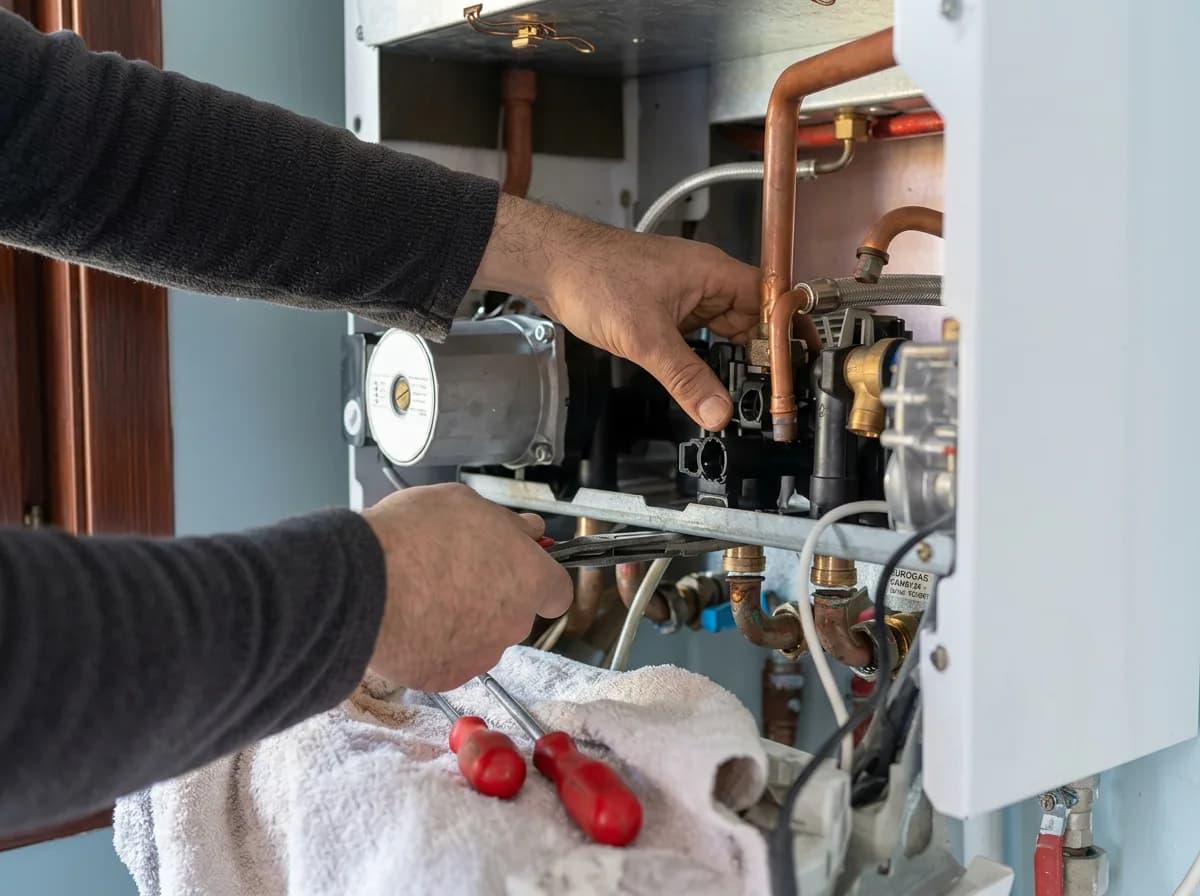
We take an engineering-led approach to water heater upgrades — whether tankless or heat pump. Proper placement, sizing, and real-world efficiency are planned from the start so your system performs reliably for years.
- Optimal placement planning — wall-mount for tankless, airflow-optimized for heat pump
- Gas line or electrical panel evaluation and dedicated circuit sizing per code
- Proper sizing based on household occupancy, fixture count, and peak demand
- Full post-install commissioning with temperature, flow rate, and performance verification
- Rebate and incentive filing assistance for NYSERDA, federal tax credits, and utility programs
Questions & Answers
Common questions about tankless and heat pump water heater installation, efficiency, and what to expect.
Do you install tankless and heat pump water heaters?
Yes — we handle full installations for both tankless and heat pump water heaters across the NYC tri-state area. Our licensed technicians manage everything from removing your old tank to running new gas lines or electrical circuits, venting, condensate drainage, and commissioning the new system. We work with leading brands including Rinnai, Navien, Noritz, Rheem, A.O. Smith, and Stiebel Eltron.
What's the difference between tankless and heat pump water heaters?
Tankless water heaters use gas or electric to heat water on demand as it flows through the unit — no storage tank needed. Heat pump water heaters use a compressor to extract heat from the surrounding air and transfer it to a storage tank, using roughly 60–70% less electricity than a standard electric tank. Tankless is ideal when space is limited or you want unlimited hot water flow. Heat pump is best for maximizing energy savings and qualifying for NYSERDA rebates.
Do incentives apply to water heater upgrades?
Yes — NYSERDA offers instant rebates on qualifying heat pump water heater installations. The federal Inflation Reduction Act also provides tax credits for high-efficiency water heaters installed in your primary residence. Some local utilities offer their own rebate programs as well. We help identify every incentive you qualify for and assist with the application paperwork.
Can a tankless or heat pump unit replace my existing tank?
Absolutely. Both are designed as direct replacements for existing tank systems. Tankless units mount on a wall and free up floor space. Heat pump units have a similar footprint to a standard tank. We verify clearances, gas or electrical requirements, and venting during our site evaluation. Most transitions are completed in a single day.
Do these systems work in colder climates?
Yes. Modern tankless units are rated for cold-water inlet temperatures common in New York winters and adjust burner output accordingly. Heat pump water heaters extract heat from indoor ambient air, so as long as they are installed in a space that stays above roughly 40°F, they operate at full efficiency. In extremely cold conditions, most HPWH units switch to a hybrid mode to maintain consistent hot water.
Will I get an estimate before work begins?
Always. After our initial site evaluation we provide a detailed written estimate that includes equipment costs, labor, any gas, electrical, or plumbing modifications, permit fees, and a breakdown of applicable rebates. There are no hidden charges. We review the scope of work with you before scheduling the installation.
Which brands do you work with?
For tankless we install and service Rinnai, Navien, Noritz, Rheem, and Bosch. For heat pump water heaters we work with Rheem, A.O. Smith, Bradford White, and Stiebel Eltron. We recommend the best option based on your space, usage, and budget.
How do I know which type is right for me?
It depends on your space, hot water demand, fuel availability, and goals. If you have natural gas and want endless hot water in a compact footprint, tankless is a great fit. If you want maximum energy savings and qualify for rebates, a heat pump water heater is the way to go. During our site evaluation we assess your situation and recommend the best option.
Ready for a water heater upgrade done right?
From first call to final walkthrough — engineering-led service you can trust.