It's the middle of a New York summer and your AC is blowing warm air. Or it's January and the heat just stopped. Before you panic, there are a few things you can check yourself — some of which are embarrassingly simple fixes that don't require a service call at all.
Start With the Basics
- Check your thermostat — Make sure it's set to the correct mode (Cool for summer, Heat for winter) and that the set temperature is below room temp for cooling or above for heating. If it's a battery-powered thermostat, try fresh batteries.
- Check the circuit breaker — Your system has at least two breakers: one for the indoor unit and one for the outdoor unit. If either has tripped, reset it once. If it trips again, do not keep resetting it — call for service.
- Check the filter — A severely clogged filter can shut down the system. Pull it out and see if it's blocked solid. Replace it and restart the system.
- Check the emergency switch — Many systems have a light switch on the wall near the furnace or air handler. Someone may have accidentally turned it off.
AC-Specific Troubleshooting
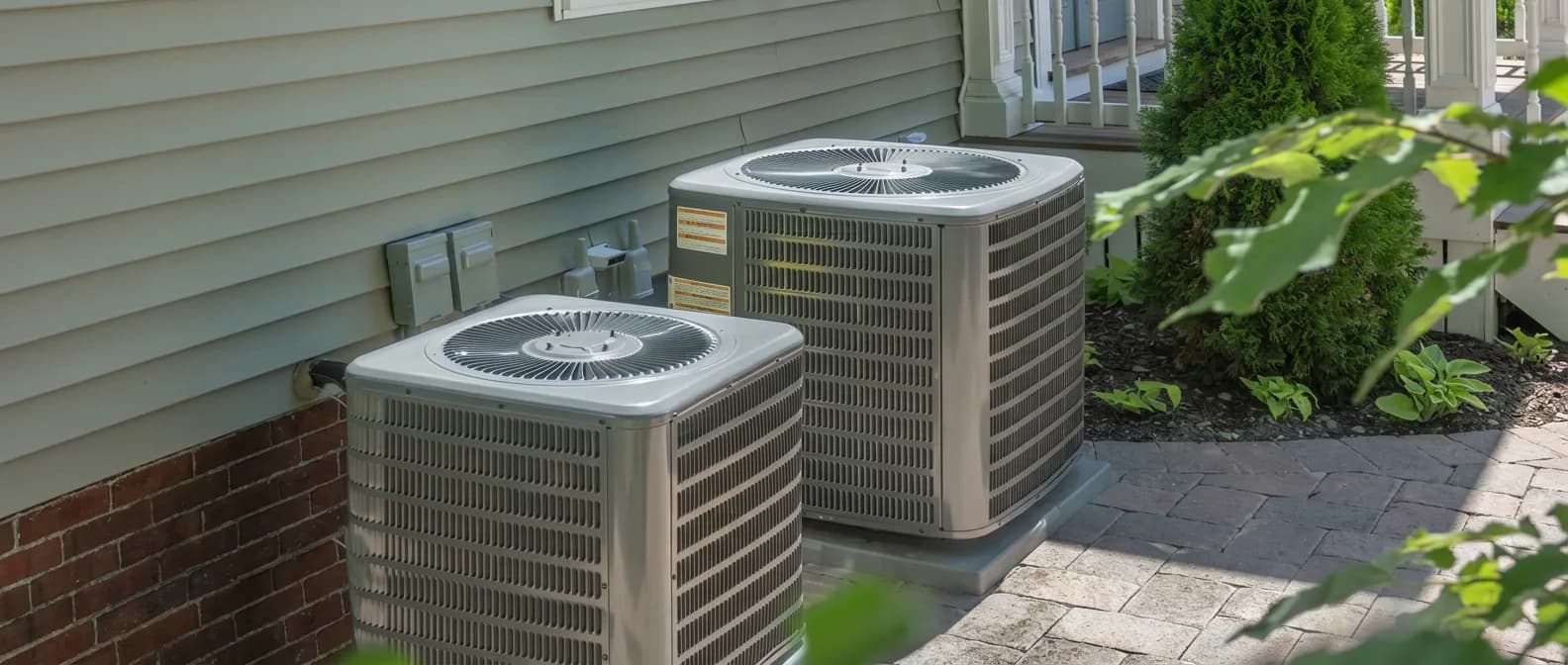
If your air conditioner is running but not cooling, check whether the outdoor unit is actually running. Walk outside and listen. If only the indoor fan is blowing but the outdoor condenser is silent, the issue is likely a tripped breaker, a bad capacitor, or a failed contactor — all common repairs.
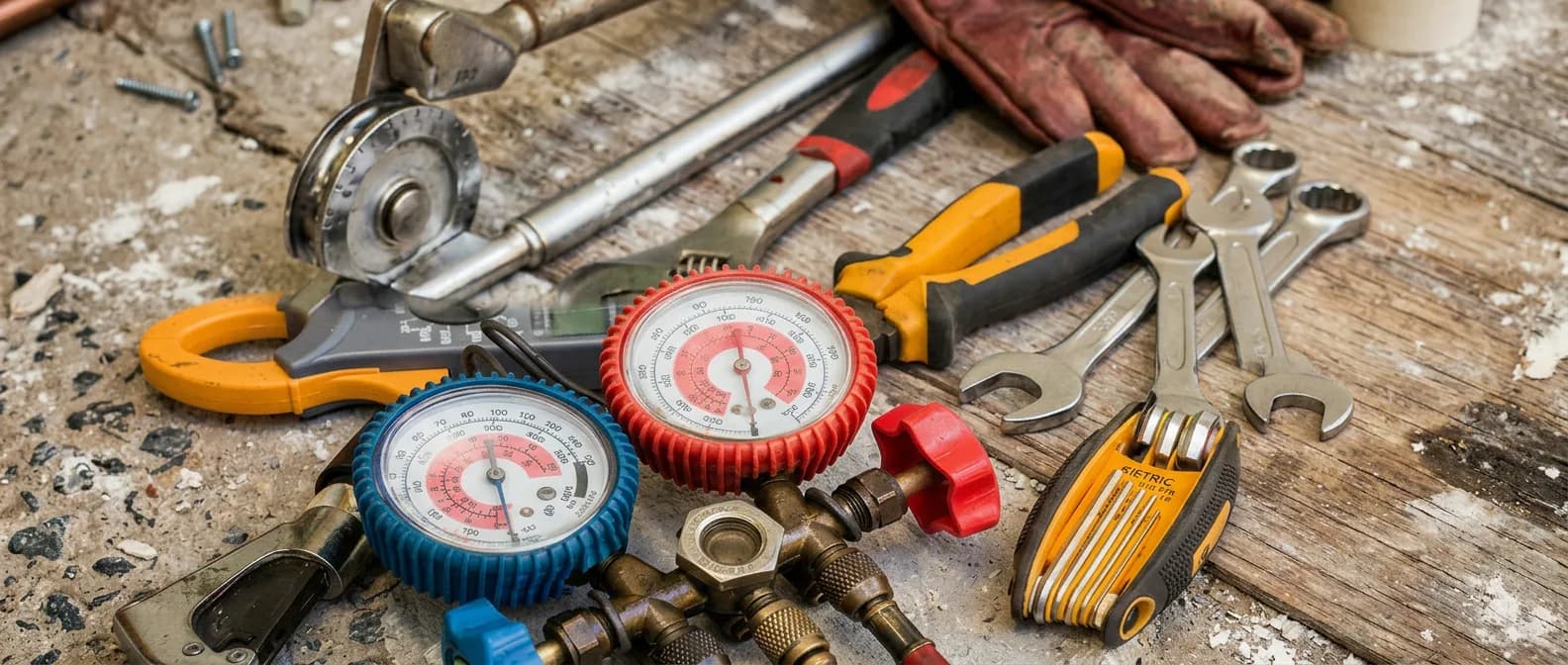
If the outdoor unit is running but the air coming from your vents is barely cool, the system may be low on refrigerant. Refrigerant doesn't "burn off" — if it's low, there's a leak somewhere. This requires a professional with gauges and leak detection equipment to repair properly.
Ice on the refrigerant lines or the indoor coil is a sign of low refrigerant or restricted airflow. Turn the system to "Fan Only" to let the ice melt before running it in cooling mode again — running a frozen system can damage the compressor.
If you see ice buildup or suspect a refrigerant leak, it's time for a professional diagnostic. Our technicians can locate the leak, repair it, and recharge the system properly. Get in touch
Heating-Specific Troubleshooting
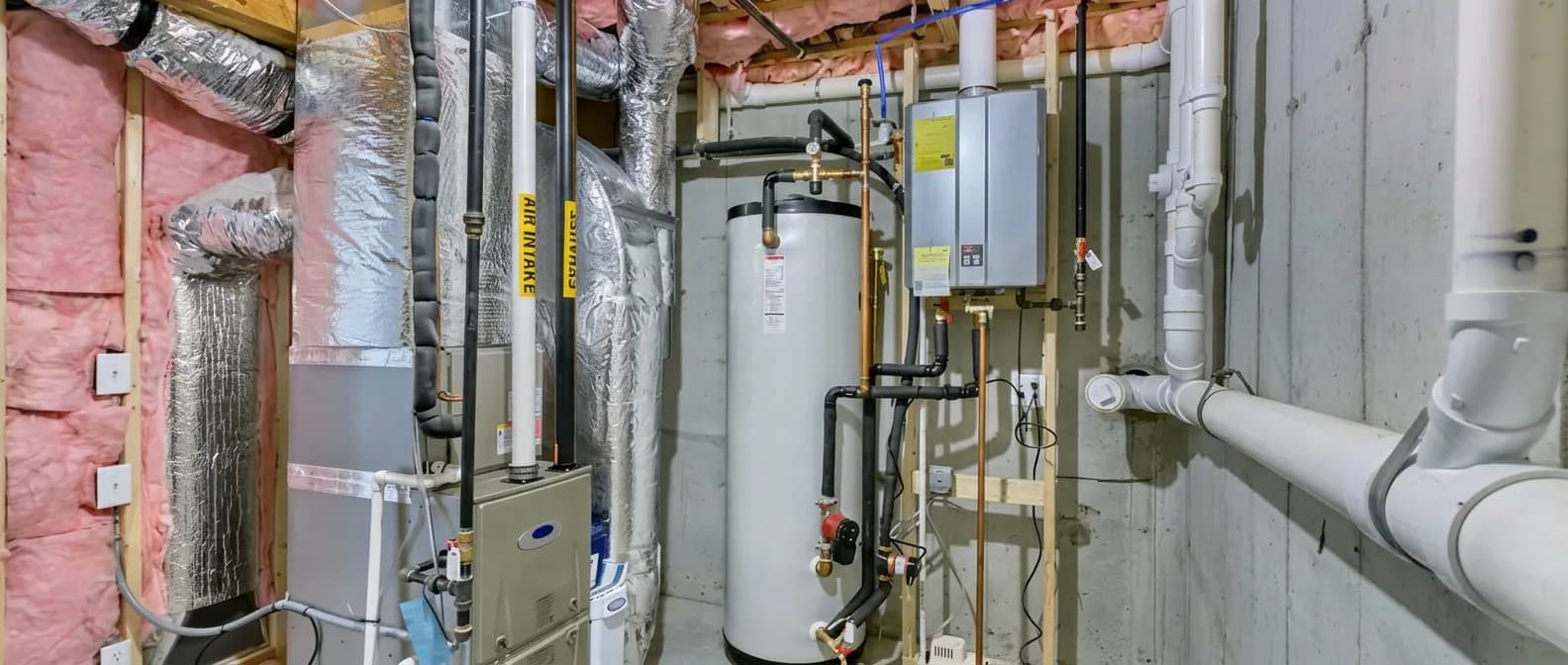
For gas furnaces, check whether the unit is igniting at all. Modern furnaces use electronic ignition (hot surface igniter or spark ignition), not a standing pilot. If you hear the inducer motor start but never hear ignition, the igniter may have failed. This is one of the most common furnace repairs and usually takes about 30 minutes to fix.
For boilers, check your water pressure gauge. Most residential hot water boilers should show 12–18 psi when cold. If the gauge reads zero, the system may have lost water pressure — usually from a failed fill valve or a leak. Steam boilers should have visible water in the sight glass. If the glass is empty, the boiler shut itself down as a safety measure.
For heat pumps, remember that heat pumps in heating mode blow air that feels cooler than a gas furnace — typically 90–100°F supply air versus 120–140°F from a furnace. This is normal. However, if it's very cold outside (below 30°F) and your auxiliary/emergency heat indicator is on constantly, the heat pump may need service.
When to Call a Professional
- The breaker keeps tripping after you reset it
- You smell gas or burning near the furnace
- There's water pooling around the unit or boiler
- The system runs constantly but never reaches the set temperature
- You hear loud banging, grinding, or screeching
- Error codes or flashing lights on the control board
Many of these issues have straightforward fixes when caught early. Ignoring them tends to turn a $200 repair into a $2,000 one — or a full system replacement.
Not sure what's going on? Our techs carry the parts and tools to diagnose and fix most problems in a single visit — no second trips.
Request a Diagnostic