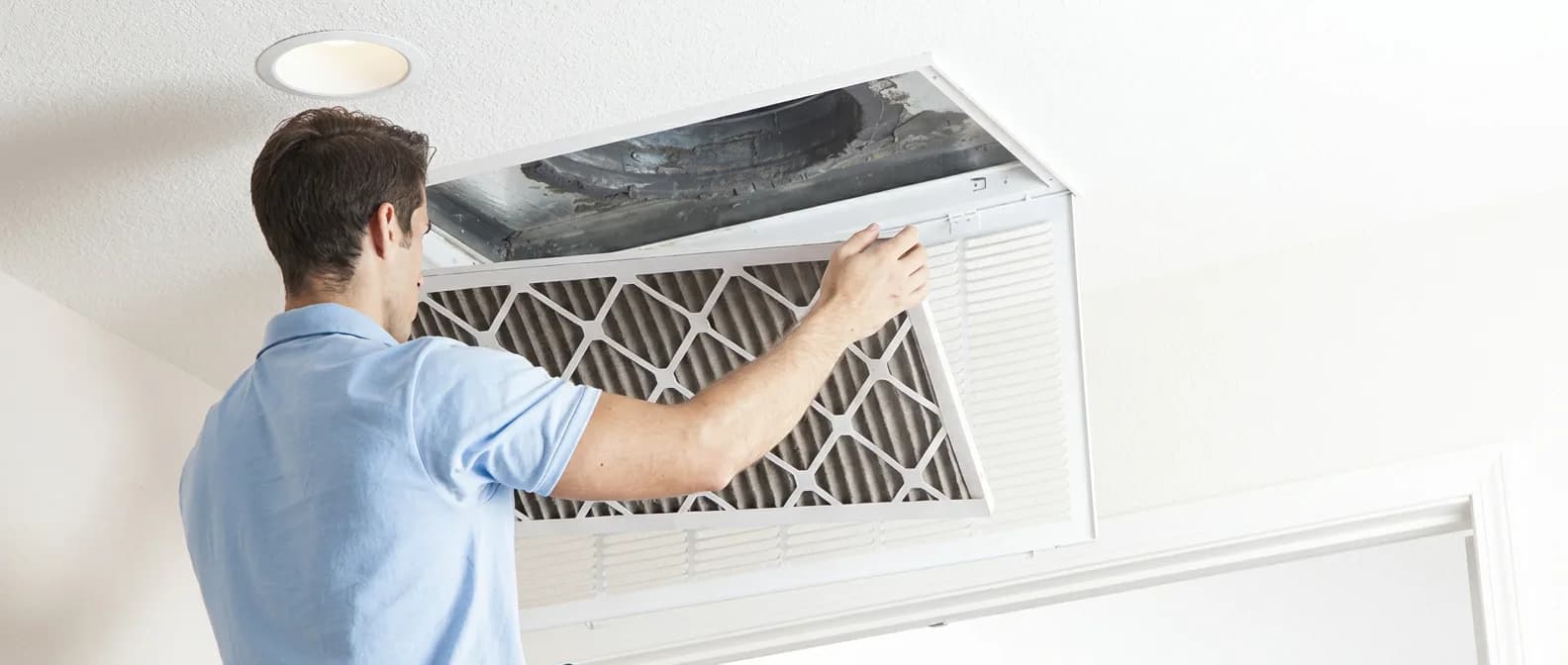
"Just change your filter" is the most common HVAC advice — but how often? Every month? Every three months? Once a year? The answer isn't one-size-fits-all, and getting it wrong in either direction causes problems.
Filter Types and Their Lifespans
- 1-inch fiberglass (MERV 1–4) — Change every 30 days. These are basic dust catchers, not air cleaners. They protect the equipment, not your lungs.
- 1-inch pleated (MERV 8–11) — Change every 60–90 days. The most common residential filter. Good balance of filtration and airflow.
- 4-inch or 5-inch media filter (MERV 11–13) — Change every 6–12 months. These fit a dedicated filter cabinet and hold far more dust before restricting airflow.
- HEPA or MERV 16+ — Requires a system specifically designed for it. Do not put a HEPA filter in a standard furnace — the pressure drop will damage your system.
MERV stands for Minimum Efficiency Reporting Value. Higher isn't always better — a MERV-13 filter in a system designed for MERV-8 can restrict airflow and raise static pressure, causing the same problems as a clogged filter.
Factors That Shorten Filter Life
Your filter won't last as long if you have pets (especially dogs and cats that shed), if anyone in the household smokes, during heavy pollen seasons, if you live near a construction site, or if you run the fan in "On" mode instead of "Auto." In these cases, check your filter monthly and replace it when it's visibly gray and matted.
What Happens When You Don't Change It
A dirty filter is the single most common cause of HVAC system failure. When the filter clogs, airflow drops. In cooling mode, reduced airflow causes the evaporator coil to freeze, which can send liquid refrigerant back to the compressor — the most expensive component in the system. In heating mode, restricted airflow causes the heat exchanger to overheat, triggering the limit switch and shutting down the furnace. Over time, these stress cycles shorten the life of every component in the system.
If your system keeps shutting down or you're dealing with uneven temperatures, a clogged filter might be the start — but not the whole story. We can do a full system check to find out. Get in touch
Choosing the Right Filter for Your System
The best filter is the one your system was designed to handle. Check your equipment manual or the label on the existing filter rack for the maximum MERV rating. If you want better filtration without restricting airflow, the solution isn't a thicker filter in the same slot — it's a wider filter cabinet (4 or 5 inches) that gives more surface area for air to pass through.
For NYC apartments and older buildings where space is tight, a well-fitted MERV-8 pleated filter changed regularly will outperform a high-MERV filter that's choking the system. Filtration is a system design decision, not just a trip to the hardware store.
We service filters, coils, and full systems across NYC and the surrounding area:
Not sure which filter your system needs? We can evaluate your setup and recommend the right filter type and MERV rating for your equipment and ductwork.
Ask Us About Filters